

作者的所有照片
我们继续看看引擎公司歌剧tions with getting water to and on the fire.Last time我们查看了从消防栓或供水到卡车所需的步骤和所需的步骤。尽管这项技能是基本的,但要知道并精通抑制工作的中断是一项至关重要的技能。现在,让我们看一下流程评估的第二部分,对我们的“滚动”钻头进行了燃烧和火上的水:推进前连接的处理方式。
今天,大多数服务的消防车将在需要时至少有两辆预连接的螺旋线。前连接霍斯线的主要目的是减少从卡车上取下软管,将其滚出或部署到泵排放出口的时间,然后用水为线充电。借助前连接的霍斯线,这只是从软管中拉出所用的螺旋线并将其剥落的一个问题。这两个步骤是我们对演习的过程评估的重点。
相关的消防员培训
INCREASING THE VERSATILITY OF YOUR HOSEBED
Training Minutes: The Modified Minuteman
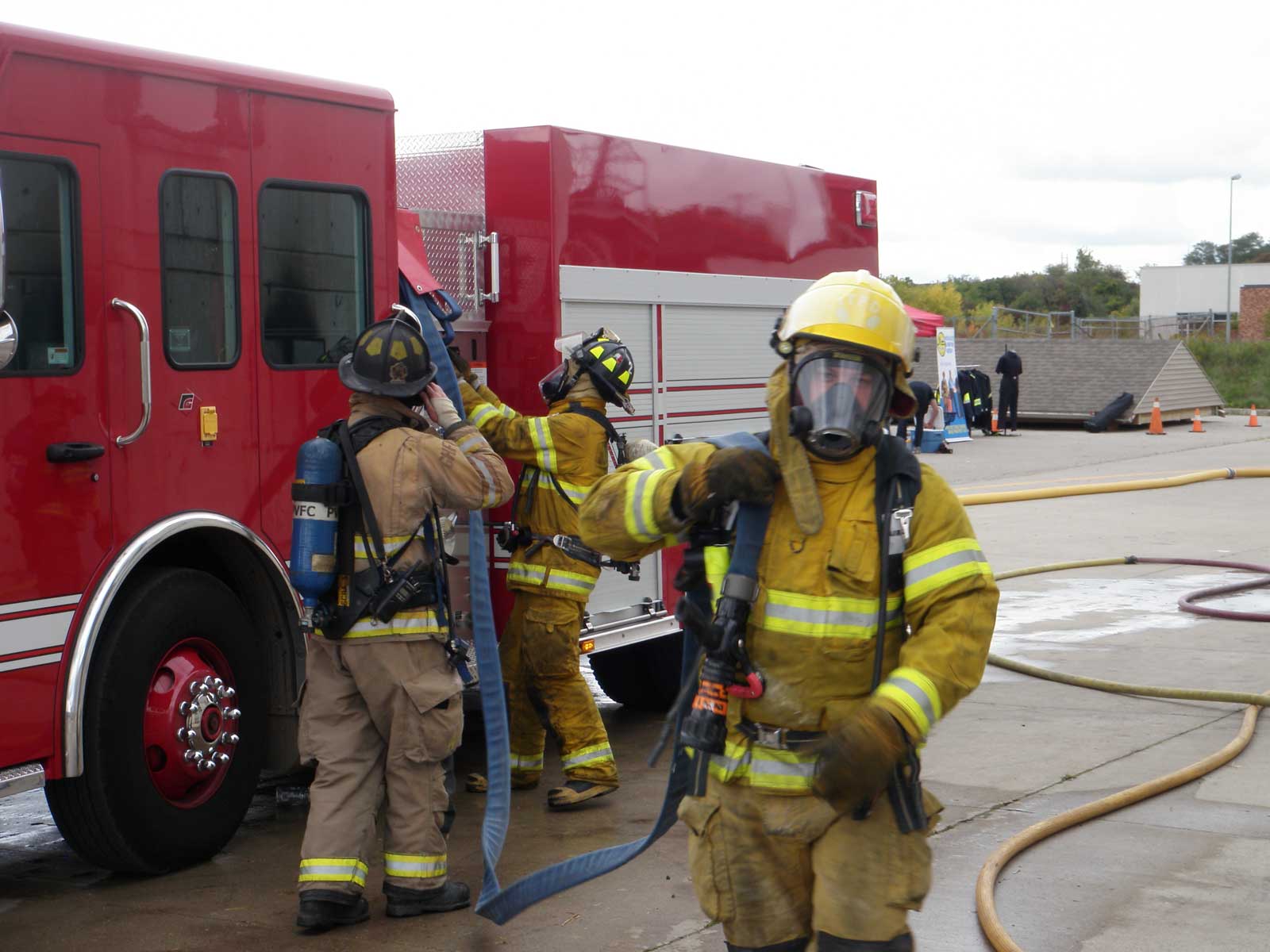
关于前连接的霍斯线,有一些可用于加载软管的选项。平坦负载有一些变化,可能会带有一两个循环,以便于拉动,或者可能会轻松拔下和轻松部署的民兵负载。基本的软管负载是没有循环或变化的平面负载。如您在照片1中所看到的,基本的扁平负载将使所有软管端在软管边缘排成一列。躺在软管负荷的顶部将是喷嘴。可以通过两种方式之一来推进这种基本的软管负载:正确的(有效)方式或错误(长)。

The wrong way is what you will see pictured in photo 2 where one firefighter will grab the nozzle and start to walk towards the door of the building or to the fire location. What is happening here is a spaghetti noodle being produced. If a preconnect hoseline contains 200 feet of hose, this will be a very long piece of spaghetti being pulled from the truck just like a spaghetti noodle being produced from a press. This style of hose advancement wastes time and resources.

What ends up happening is the nozzle firefighter pulls the hose off with the rest of the hose being pulled by either the backup firefighter or the driver/pump operator. By doing it in this method, the hose takes a while for it to be deployed from off the truck and it takes a while for it to be readied for advancement into the structure. Also, at the door of entry for the attack, the nozzle will be there along with a straight line of hose following behind. This is very inefficient as it will take great effort to advance the line into the building. It will take more work to pull the hoseline in with you because you are pulling the weight of the hose as well as the weight of the water in the hose. Working against the hose advancement is friction, which is produced from the ground on the hose.
The efficient or right way: as you can see in photo 1, the flat load has many loops at the end of the folds. These little loops are perfect for our fingers to fit inside. Using our gloved hand, we can insert three of four fingers into a loop each and pull a half portion of the load off in one pull. Once we pull it off, we throw it to our left on the ground. We then go back up to the hose load, reinsert our gloved fingers into the remaining folds, and pull the rest of the load off the truck. We then throw this section of the load on our right-hand side onto the ground.
In two quick movements, we have the entire hose load on the ground ready for flaking out. Now lying on the ground with the nozzle are the couplings of the line. Depending on the number of hose lengths you have packed for the preconnect, you will find either three or four couplings on the ground: two on one side and two or one on the other side. We then grab the nozzle from the one side and look for couplings on the other side. We grab it and then start to walk towards the door for entry.
通过这样做,我们正在确保在我们到达结构的门并确保我们有喷嘴和一个耦合的时候,整个霍斯线将被剥落。根据您抓住的耦合,您将在门口有100英尺或50英尺的软管。门口的这种喷嘴/耦合组合使得将线路推进结构。在软管负载中标记中间耦合将有助于确保您一直抓取中间耦合以进行最大的努力。
When the hose has been stretched to the door, it needs to be flaked out so that there are no kinks in the line. This is where the backup firefighter can help. As they walk up to the nozzle firefighter, they can check the line and flake it out. At this point we are waiting and ready for water.

在照片3中,您将看到一个示例,说明我们如何不想剥去与建筑物方向相关的软管。如果我们要进入那所房子的前门,我们希望将软管与建筑物入口相同的方向排列。尝试从进步的一开始就将软管拉/推进软管,这是行不通的。它只会对您不利,并迅速疲劳。将软管朝着旅行方向排列,然后您会发现它会更容易。下次,我们将考虑将水从卡车到喷嘴,然后进入我们的入口,以将水倒入和火上。

马克·范德·费斯thas been in the fire service since 1999 and is a full-time firefighter in Ontario, Canada. He is an international instructor teaching in Canada, the United States, and India, and at FDIC. Van der Feyst is a local level suppression instructor for the Pennsylvania State Fire Academy. He is also the lead author ofResidential Fire Rescue(188金宝搏是正规吗消防工程书籍和视频)。
MORE MARK VAN DER FEYST


