

照片的作者
上个月,我们看了看rapid fire developments (RFD)in terms of flashover. This term encompasses occurrences such as flashover, backdrafts, and/or smoke explosions, but our focus is on flashover. We are going to continue our look at such phenomena with how we can aggressively cool the environment and the contents.
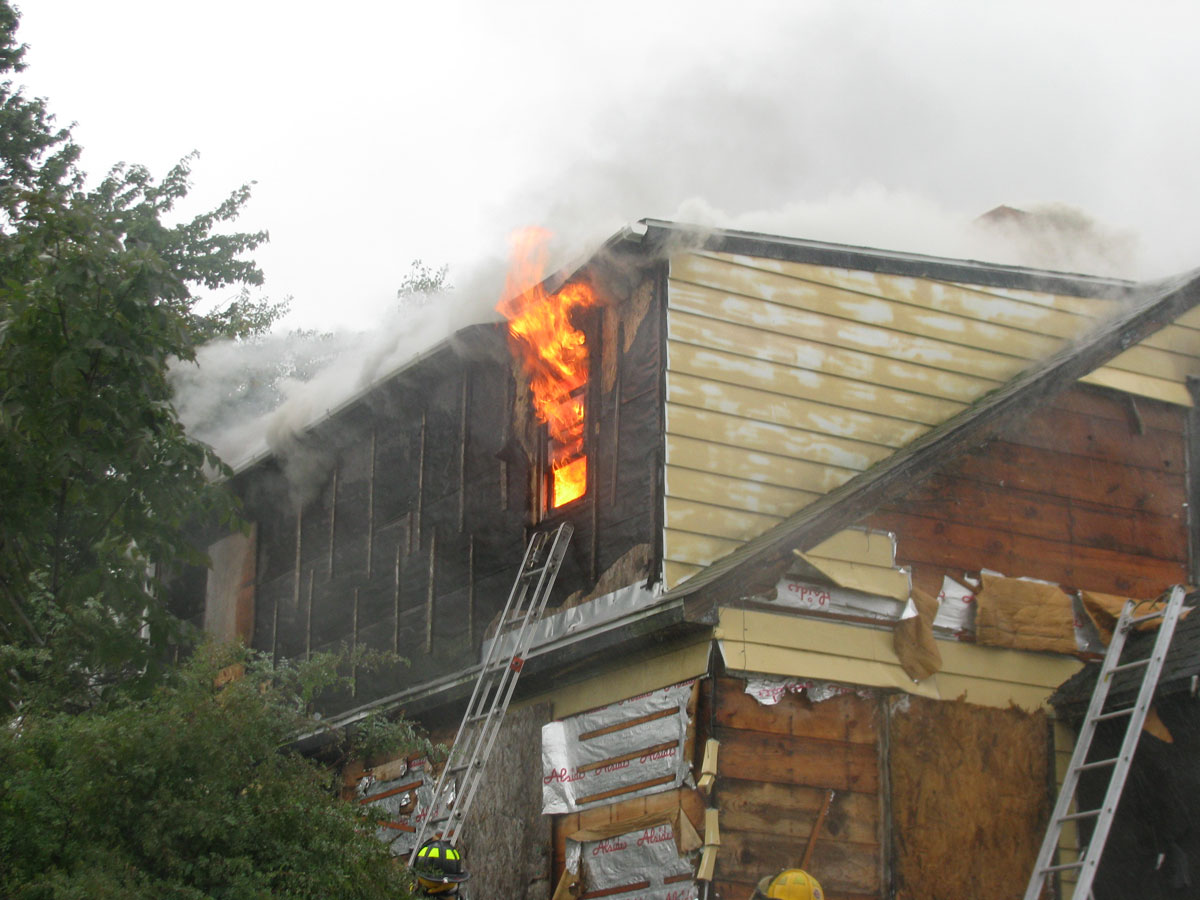
As a reminder, a flashover is the simultaneous ignition of everything within a room. It occurs when hot gases rise to the ceiling and spread out across the walls. These hot gases are what we call black smoke – unburned particles of combustion. As it spreads out across the ceiling and the walls, it starts to heat up the items found within the room such as the paint on the walls, the furnishings, clothing, mattress, flooring material, etc., until they all reach their ignition temperature. Once they are all at their ignition temperature, a rapid fire development occurs, with everything becoming a big ball of fire. We are looking at temperature ranges between 1,000-1,500°F, which requires a good amount of water to effectively cool it.
相关的消防员培训
Flashover Strategy and Tactics
Firefighters Trapped in a Flashover
我们的视线和触觉警告我们,有一些迹象或指标可见。当这些迹象和指标揭示出来时,消防员必须注意他们并采取积极的行动。这些指标如下:
- 热积聚:Based on the temperature range of flashover, there will be a period when excessive heat buildup will occur. This heat buildup will descend towards the lower levels of the room, pushing the firefighter down to the floor. This will be the result of radiant heat being produced by the unburnt particles of combustion spreading out from ceiling to walls and then down to the floor area. When this quick increase in heat occurs, and it is an intensive heat, flashover is impending.
- 滚下:This is a visible indicator as it reveals itself in the smoke. A rollover or flame-over is when small gaps open in the smoke layer, allowing air to mix with the unburned particles of combustion and ignite. Small flames can be seen amid the smoke for momentary periods of time and then disappear. This is a warning sign that flashover is coming.
- 浓的黑烟:这也是一个可见的指标,因为它将在建筑物外以及建筑物内部展示。在内部,除了总黑度外,您不会看到任何东西。在外面,您会注意到这一点:每当您有浓密的黑暗,刺激的黑烟时,从高压下从结构上推出,并且以高速度的速度将其闪存。这是关于内部等待我们的外部警告,或者向外部人员和事件指挥官采取行动以协助内政机组人员的外部警告。
采取积极的行动对这种特殊的RFD意味着以聪明的方式行事,以便我们获得上风。有两种方法可以有效克服和消除闪存:战术通风和用水积极冷却。
战术通风将有助于快速去除未燃烧的燃烧颗粒,热气体,烟雾和热量。这可以用各种方法来完成,最有效的是垂直通风。随着热量和烟雾想要自然升高,垂直开口将使它们能够升起并逃脱结构。带有垂直通风的钥匙是将开口正上方放置,以形成直接的烟囱或前往外部的行进路径,以供烟雾和热气体。
必须将其与积极的冷却和水的施加结合。在这里,应使用最小1400 gpm的手柄,至少1¾英寸,以便一次有效地冷却天花板,墙壁,地板和内容。拥有适当的喷嘴将有助于解决这个问题 - 这是我们可以考虑查看光滑的孔和自动喷嘴的地方,但这是另一个话题。
Aggressive cooling involves using a straight or solid stream of water from the nozzle. We do not want to use a fog pattern of any type when facing preflashover conditions. A straight or solid stream of water is going to allow us to effectively knock down the fire while at the same time reducing the heat inside from the extreme high temperatures to a much lower temperature. An example of this is with the UL FSRI tests conducted in February and March, where temperatures were recorded to have been reduced by about 1,300°F with an aggressive attack with a smooth bore nozzle.
So how do we aggressively cool? We need to move the nozzle in a pattern that will hit the ceiling, the walls, and the floors all in a sequential and consistent fashion. Sweeping across the ceiling then straight down to the floor is one method, as well as sweeping the ceiling and also sweeping the floor. No matter what style chosen, it will involve movement, not a static application of water.
It also involves applying water to cool off the ceilings, walls, floors, and contents as we advance into the structure. This will require us to apply water to “black fire,” the unburned particles of combustion. Remember, they are contributing to the radiant heat against the ceiling, walls, floors, and contents. The black fire needs to be cooled a as well as the container that it is influencing. This will sound overly aggressive and will go against everything taught for the last number of years – we never spray water at smoke. However, with the change in technology and with science, we need to spray water at the smoke to effectively cool it and render it weak in terms of contributing to a flashover.
 Mark van der Feyst自1999年以来一直在消防和firefighter with the Fort Gratiot (MI) Fire Department. He is an international instructor teaching in Canada, the United States, and India, and at FDIC. He is also the lead author of住宅消防救援(Fire Engineering Books & Video).可以在Mark@FireStarTraining.com.
更多Mark Van der Feyst
188金博网网址多少消防基础: Getting Water to and on the Fire, Part 1|第2部分|第3部分


